Three Cats, Two Rooms, Three Litter Boxes
The common rule is one litter box per cat plus one spare, which for three cats means four. We run three boxes across two rooms, and it has held up for months, because where the boxes sit and how often they are scooped turn out to matter more than the count. If you have a small home and the rule sounds impossible, it probably is not the rule you need to follow first. Here is how we got to three, what we changed along the way, and the two situations that would make us add the fourth box tomorrow.
Some links below are affiliate or referral links. We earn a small commission at no cost to you. We only recommend what we actually use for Bandita, Whitey, and Shempy. As an Amazon Associate we earn from qualifying purchases.
How we ended up with two rooms in the first place
We did not design this setup. It arrived.
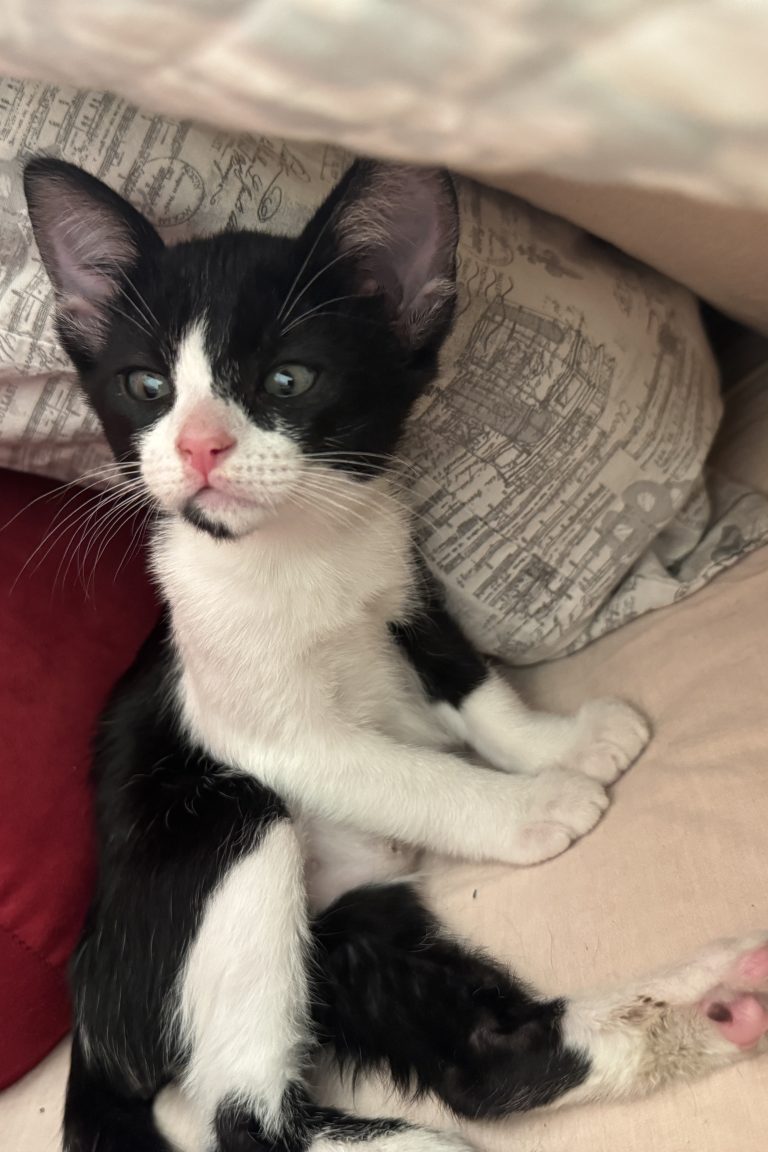
Bandita came home on February 13th, 2026, and lived in one bedroom with a litter box in the attached bathroom. One cat, one box, simple. On March 23rd we adopted Whitey and Shempy, two bonded former strays, and the simple version ended in an afternoon. Bandita was not pleased to find newcomers in her territory, so the boys got a second bedroom with their own crate, food, water, and litter box while we worked through a slow introduction.
Two occupied rooms is what produced the box math. Not a plan. A house with three cats in it who were not ready to share.
Why three boxes and not four
The plus-one rule exists for good reasons. It reduces competition, it gives a bullied cat somewhere to go, and it buys you slack when a box gets dirty faster than you expected. We are not arguing with any of that.
We run three anyway, for three reasons that are specific to our house.
The boxes are in two separate territories, not one. The rule assumes cats share a space and have to queue. Ours did not share for a long stretch. A fourth box in a room a cat cannot enter is not a spare box. It is furniture.
A fourth box would have to go in a room that already has one. Two boxes side by side read to our cats as one box, and read to us as twice the smell in a space that already had a ventilation problem. That trade is not worth it.
We scoop more often than the rule assumes. The plus-one rule is partly insurance against inconsistent cleaning. Twice a day, every day, removes most of what the spare box protects against. That is the trade we made: fewer boxes, more of my time. Some weeks it is the least appealing ten minutes of the day, and I would rather say so than pretend otherwise.
The two things that would change our minds immediately. If any cat started going outside a box, the fourth box goes in that same day, before we look at anything else, because litter box avoidance is the most common early sign that something is wrong. And if the three ever have to share one room permanently, three boxes for three cats in one space stops being enough and we would go to four.
What we started with, and why we changed
I bought the first bag of litter on one nervous shopping trip the morning we brought Bandita home. It was Purina Tidy Cats Lightweight, and I picked it because it was on the shelf and it was easy to carry to the car. I am a sustainability professional. I read labels for a living. It had not occurred to me to read one before buying cat litter.
By the end of that first week, the closed bedroom smelled, and the room was not ventilating well. The smell was the first thing I noticed. The dust was the second.
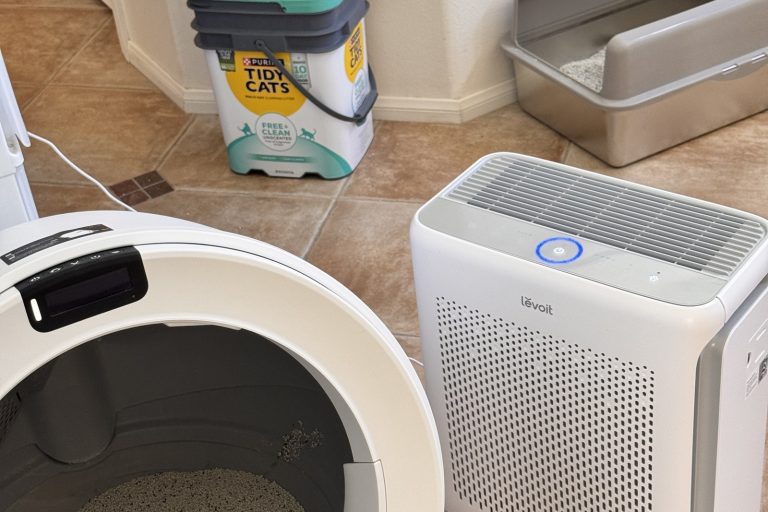
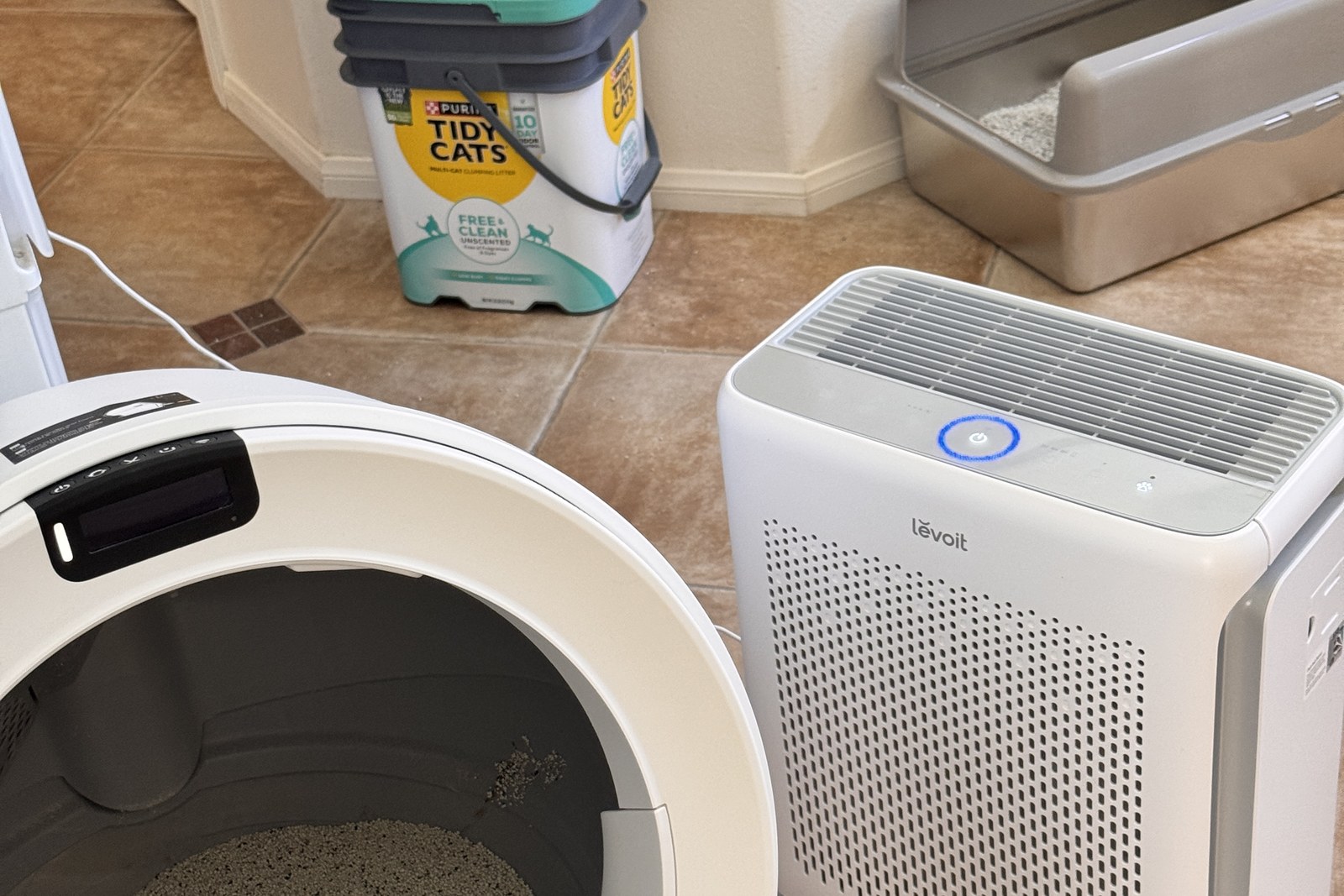
Here is where the story does not go the way you might expect, and I would rather tell it accurately than tidily. I did not switch to a boutique plant-based litter, and I did not switch quickly either. I tried several options through the spring and settled months later on Purina Tidy Cats Free and Clean Unscented Clumping Multi Cat, which is a mainstream clay litter from the same company as the bag I started with.
Two things changed from that first bag, and both of them were label decisions rather than brand loyalty. The fragrance is gone, which is what a fragrance-sensitive household actually needed. And it is the regular-weight clumping formula rather than the lightweight one, because the lightweight version was the dusty one in our house.
What we use now: Purina Tidy Cats Free and Clean Unscented Clumping Multi Cat
Why it is here: unscented, regular weight, and it clumps well enough that scooping twice a day is quick rather than a project.
People / Planet / Value: People: high · Planet: low · Value: high
What we have seen: in daily use since spring 2026. Every scented litter we tried set off sneezing, mine more or less constantly and Whitey’s for long stretches after he came out of the box. Switching to unscented ended it. This one was low dust and controlled odor from the first bag, with no fragrance doing that work for it.
The transparent part: clay is strip-mined and heavy to ship, and this is clay. A plant-based litter would score better on the Planet column. We went with what controlled odor in a small desert house with three cats in it, and we would rather name that trade-off than quietly skip it.
Where to get it: Tidy Cats Free and Clean Unscented Clumping on Amazon
So the standard behind this site did not come from finding a fashionable brand. It came from a stuffy room in February, and from realizing that I had bought something for an animal I was responsible for without applying five seconds of the attention I apply at work. Fragrance and dust are what I read for now. Sometimes the answer to that check is a mainstream product on a supermarket shelf, and when it is, we will say so.
The boxes are also the health monitor
This is the part I did not understand at the start, and it is the strongest argument for scooping by hand rather than automating it away. Twice in our first months, the litter box was where we found out something was wrong.
In April 2026, Bandita had soft stool with blood in it. We saw it in the box, called the vet, and she was treated with metronidazole. Nothing about her behavior had told us first.
Shempy had a tapeworm that a fecal float test had already missed. I found it because I saw segments, not because a test flagged it. That story is its own post, because the mechanism is worth understanding: the tapeworm the fecal test missed.
Three boxes across two rooms also means we know whose output is whose most of the time, which is not a small thing in a multi-cat house. When all three share a single box, a health problem becomes an anonymous problem.
We are not veterinarians, and none of this is veterinary advice. It is the reason we look.
The calm part of the setup
Litter box tension in a multi-cat home is often territorial rather than practical. During our introductions we ran a Feliway MultiCat diffuser, and it stayed part of the setup afterward.
What we use: Feliway MultiCat diffuser
Why it is here: box guarding and box avoidance in a multi-cat home are usually about tension between cats, not about the box. A diffuser addresses the tension, which is the actual cause.
People / Planet / Value: People: high · Planet: medium · Value: medium
What we have seen: when the boys arrived, Bandita was distressed for days rather than hours. Her pupils were wide almost constantly, which is the tell we learned to watch for, and she never really settled. Our vet suggested the diffuser, we ran one in a single room, and the household calmed down.
The caveat we owe you: we were changing several things that week, including separating the cats and starting short supervised sessions, so we cannot separate the diffuser from the rest of it. Our vet did explain why it does nothing to the people in the house: the pheromone is species-specific, so humans have nothing for it to act on.
Where to get it: Feliway MultiCat diffuser kit on Amazon
The transparent caveat: a diffuser is a refill product, which is a recurring purchase and recurring packaging. That is the trade-off, and it is why Planet scores medium rather than high on our Picks page rather than being written up as a clean win.
The routine, in full
- Scoop every box twice a day, morning and evening.
- Top up litter as scooping removes it rather than waiting for the level to drop.
- Full empty and wash on a schedule rather than by feel, because by feel always means later than it should have been.
- Boxes stay in the same spots. Moving a box is a change, and changes are what a nervous cat protests.
- Check what is in the box before it goes in the bag. Ten seconds. This is the health monitor.
Questions people have asked us
How many litter boxes do I need for three cats?
The standard answer is four, one per cat plus one spare, and it is a good default. We run three because our boxes sit in two separate territories and we scoop twice a day. If you are not going to scoop twice a day, follow the rule.
Does a covered box help with smell?
It helps the room and it can hurt the cat. A hood holds odor inside where the cat has to stand in it, and some cats avoid a covered box for exactly that reason. We would rather fix ventilation and scooping frequency than add a lid.
My cat started going outside the box. Is that a litter problem?
It might be, and it might be a medical one. Sudden litter box avoidance is a common early sign of a urinary or digestive problem, so the vet call comes before the shopping. Add a box in the meantime.
Where we landed
Three boxes, two rooms, twice-a-day scooping, an unscented clumping litter we came to after trying several, and a diffuser for the part of the problem that was never about the box. It is not the setup the rule would have given us. It is the one that fits a small desert house with three cats in it, and we would tell you the moment it stopped working.
More of what earned its place in our house, and what did not, is on our Practical Purrs Picks page.
What we use
The unscented litter that ended the sneezing, and the diffuser from the week the boys arrived. Tidy Cats Free and Clean Unscented on Amazon · Feliway MultiCat on Amazon · Our litter and multi-cat picks
Your turn: how many boxes do you run, and did you ever get to the plus-one number? Tell us in the comments.