How to Introduce a New Cat to a Territorial Kitten
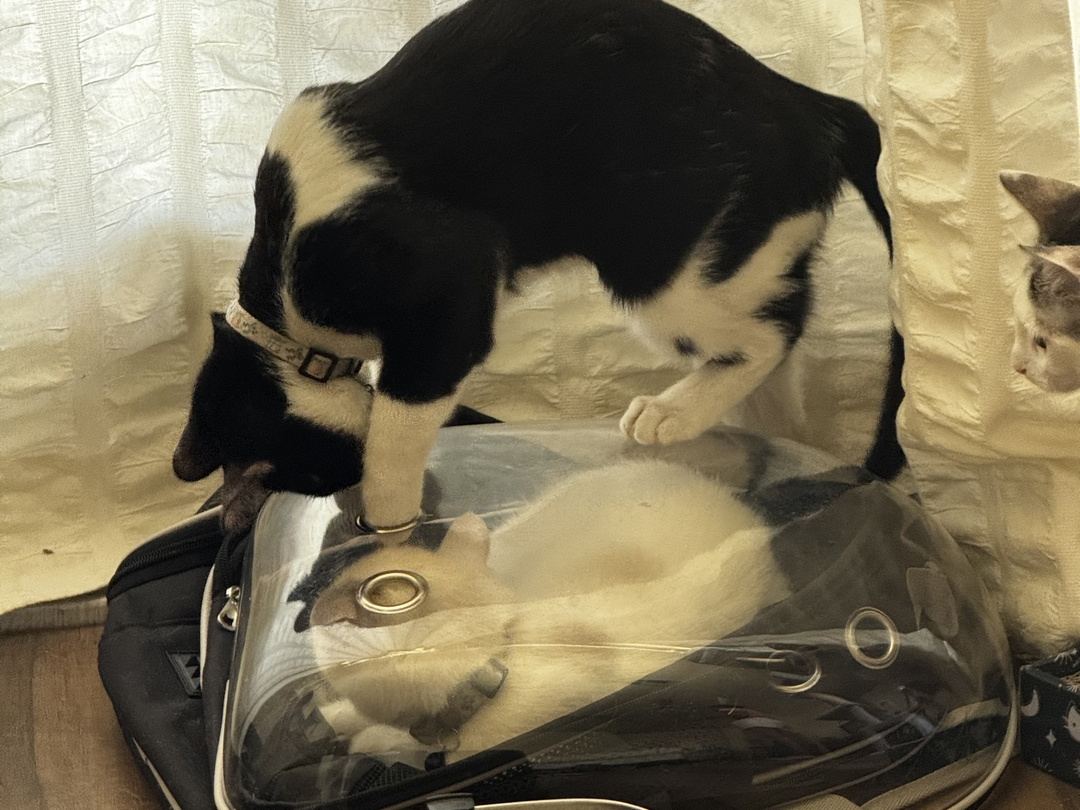
The short answer
If your resident cat is hissing, swatting, or guarding you from a new kitten, that is a normal territorial reaction, not a sign that they will never get along. The fix is to slow everything down, keep the cats separated at first, and build good feelings around short, supervised sessions with food and treats.
Some links below are affiliate or referral links. We earn a small commission at no cost to you. We only recommend what we actually use for Bandita, Whitey, and Shempy. As an Amazon Associate we earn from qualifying purchases.
Why a resident cat turns territorial
Cats are territorial by nature. To Bandita, two new kittens were not playmates, they were intruders in her space and competition for her person. The first time all three were in one bedroom, she was tense and clearly angry. That night she slept on me and pressed against me all night, which read as a plain message: this human is mine, and no one comes near.
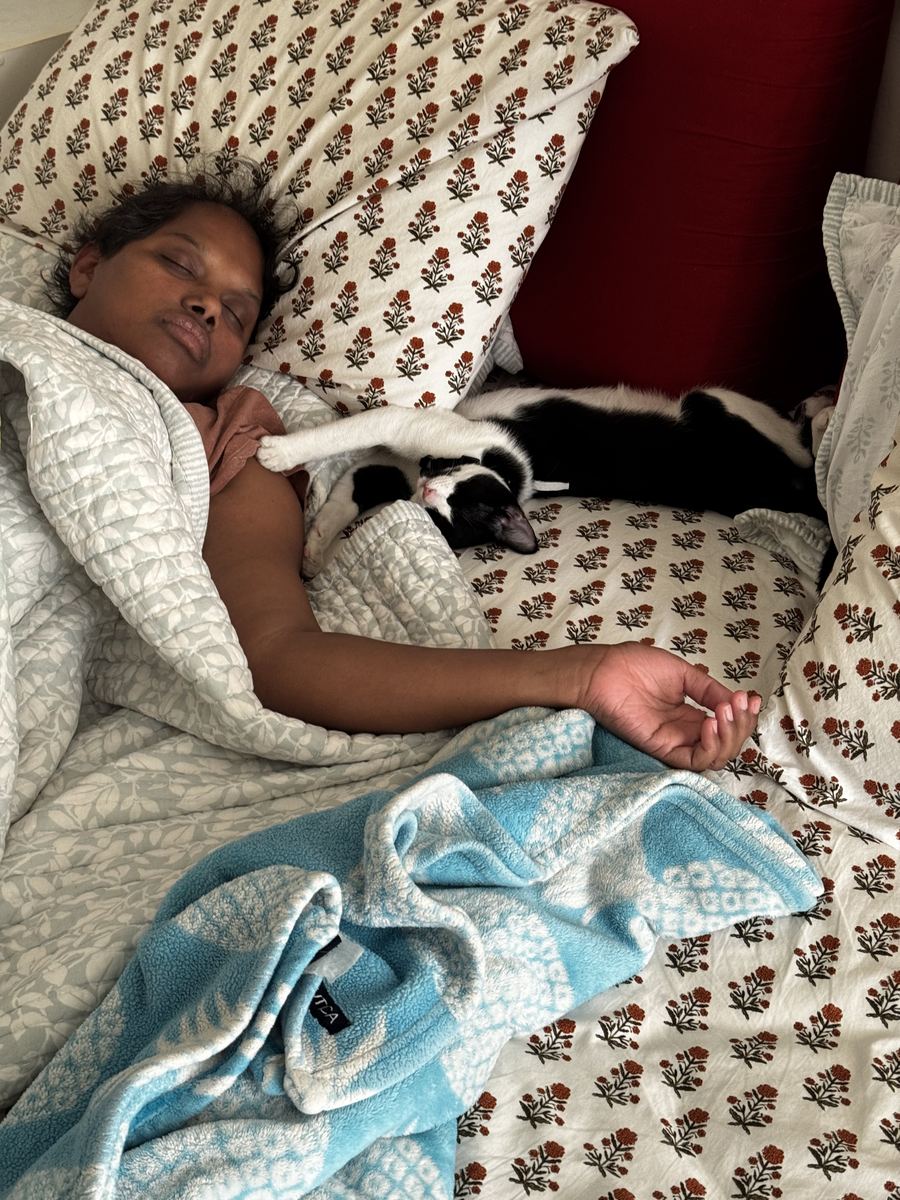
That reaction is information, not bad behavior. Your job is to lower the threat, not to force friendship.
The method that worked
We leaned on Tabitha Davies, an animal behavior trainer from Esperanza’s Second Chance Sanctuary, to read Bandita and build a plan. Here is the shape of it.
Before they meet
Separate first, in different rooms
We set the new boys up in their own bedroom with a crate, food, water, and a litter box. Bandita kept her space. Separation lets each cat feel secure before they ever have to share.
Swap scents before sights
Let the cats smell each other through the door and on shared bedding before they see each other. Scent is how cats decide who is safe.
The sessions
Keep first meetings to five to ten minutes
Short and positive beats long and tense. End every session before it goes wrong, not after.
Work the territorial cat on a harness and leash
Tabitha had us keep Bandita on a harness and leash through every session. The leash keeps everyone safe, it stops a tense moment from turning into a chase, and it puts you close enough to reward calm the second it happens.

Pair the other cat with food and treats
We fed and treated the cats near each other so each one learned that the others predict good things. Socializing around food is the heart of the method, and it is the step where the treat you choose actually matters, because it has to be worth more to the cat than the stranger across the room is worth worrying about.
I held the Churu in my hand through every session. When Bandita started moving toward one of the boys, I offered it. Sometimes she was too far gone to care about a treat, and that is where the thing that actually worked came in: I dabbed the Churu onto her front paws. A cat cannot stay in fight mode and clean her paws at the same time. She has to break off and deal with the paw, and by the time she has finished the moment has passed.
I also called her name whenever she started following one of the boys. If she turned to look, she got a “good job” and a treat. Throwing dry treats across the floor did nothing at all. The paw dab is what did it.
Once that was reliable, I started putting Churu on the ground in a spot all three could reach, so they were eating in the same place at the same time. A five to ten minute session takes three or four tubes.
Do not skimp on treats, and keep them within arm’s reach. Running out in the middle of a session, or having to walk to the kitchen for more, ends the session at the worst possible moment.
Keeping it going
If it escalates, separate and reset
Hissing happens. When a session tipped toward real tension, we calmly ended it and tried again later, shorter. Going backward for a day is normal.
Rotate the rooms, and move the bowls with them
Bandita had our room for two nights while the boys had the other, then we swapped. How often you rotate depends on your own schedule. Every night works and so does every second night. We did two.
On the days in between we ran one or two social sessions, depending on what time I had. The food and water bowls moved with the room swap, but the towels underneath them stayed where they were, so whichever cat came into the room next was eating off a towel that smelled of the others. The point was to get them associating food with the other cat’s smell. The litter boxes also stayed where they were.
Bandita found being alone hard, while the bonded boys entertained each other, so rotating kept everyone company and kept the territory from belonging to only one of them.
After every room change I made a point of playing with Bandita, so she did not feel isolated.
What we use
Churu lickable treats
A lickable treat takes long enough to finish that the cat stays in place near the other cat, which is exactly the behavior you are trying to reward.
- PeopleHigh
- PlanetLow
- ValueHigh
What we have seen: used through the introductions in the spring of 2026, with Bandita on a harness and leash. Dry treats thrown across the floor were ignored. Dabbing Churu on her front paws broke her out of fight mode every time, because she had to stop and clean it off. Three to four tubes per five to ten minute session.
This is slow work. Doing it gently is kinder to every cat in the house, and a calm home is part of our People, Planet, Value standard.
The two newcomers needed opposite things
Whitey and Shempy arrived together and were treated by every article we read as one unit, two bonded kittens being introduced to one resident cat. In practice Bandita responded to them completely differently, and the difference came down to what each boy did when she got tense.
Shempy is the friendly one. He wants to be held, he wants to play, and he moved toward Bandita. That is exactly what made him the target. Bandita grew a little aggressive specifically toward him, because he kept offering the interaction she was not ready for.
Whitey did the opposite. When things got tense he went and sat in a corner, and Bandita lost interest in him almost entirely. He was the harder cat to win over at the adoption event, the one who hid and would not come out, and he turned out to be the easier cat to introduce.
The confident, sociable newcomer is often the one who needs the most managing, and the shy one frequently sorts itself out. If you are bracing for trouble from the timid cat, you may be watching the wrong end of the room. It also means a bonded pair does not get one introduction plan. It gets two.
From the house
The part that was hardest, and it was not the cats
The rescue was kind when we adopted the boys. They told us it was a big commitment, that we did not have to rush, and that if it did not work out we could bring them back and they would find them a home.
I know that was meant as reassurance. What it did was hand me an exit, and there was a point where I wanted to take it. I thought about sending them back, guilt and all. Roland was feeling the stress too. We were both worn down.
The exhaustion was physical before it was anything else. Both boys came home from the adoption event with severe upper respiratory infections, so on top of the introductions there were eye drops in four eyes and a ten day course of an oral antibiotic in two mouths, twice a day, given to animals who had been in the house a matter of days. Switching the rooms every second night. Cleaning the litter boxes. Feeding two malnourished kittens up to a healthy weight while keeping Bandita’s own routine intact. I was tired in my body and tired in my head, and neither kind of tired makes you patient.
I am including this because introduction articles describe the mechanics and skip the part where you wonder, at eleven at night in week three, whether you have made everyone miserable. You have not. Slow progress is what this looks like from the inside.
If you are at this point, get help rather than reading more
Bringing in Tabitha was what changed it. Not because we could not have read our way to the same seven steps, but because we no longer had the capacity to work it out ourselves. Someone who has done this before will tell you in one visit what would take you six weeks to learn. If you are where I was, that is the thing to spend money on. It is worth it over figuring it out alone.
What we would do differently
Three things.
We would have separated the cats on day one rather than putting all three in one bedroom first and watching it go badly. That first evening taught us nothing we could not have learned more gently.
We would have called Tabitha before the first meeting rather than after. We brought in the expert to fix a situation instead of to set one up.
And we would have planned for the boys as two cats rather than one bonded unit, because that is what they turned out to be.
Frequently asked questions
How long does it take to introduce cats?
It varies widely, from a couple of weeks to a couple of months. Go at the pace of the most anxious cat, not the calendar.
Is some hissing and swatting normal?
Yes. Brief hissing and posturing are normal as cats sort out boundaries. Step in if it becomes sustained chasing, pinning, or injury, and shorten your sessions.
Should I get a behavior trainer involved?
If you can, it helps. A trainer reads body language you might miss and builds a plan for your specific cats. Ours changed how we handled the whole introduction. This article is general information from our experience and is not veterinary or behavioral advice for your particular situation.

The short version
She did not have to love them on day one
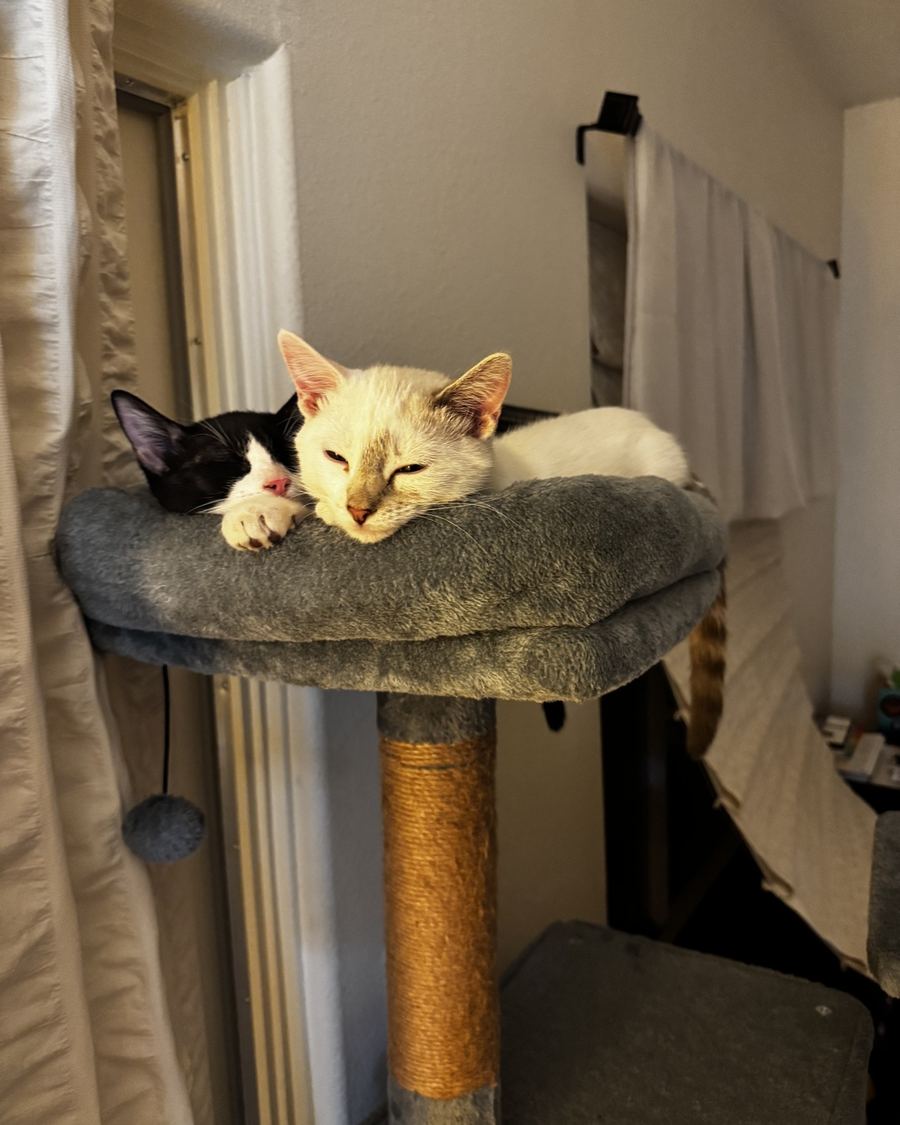
Separate, swap scents, keep sessions short, and make the other cat mean treats. Reward calm, never force contact, and accept that progress is not a straight line. Bandita did not have to love the boys on day one. She had to learn, slowly, that they were not a threat.
The calming and feeding tools we kept using are on our Practical Purrs Picks page. How did your cats’ first introduction go? Tell us in the comments.
What helped that week
Churu for the short sessions near the door, and a pheromone diffuser in one room, which our vet suggested. Churu on Amazon · Feliway MultiCat on Amazon · Our multi-cat picks
